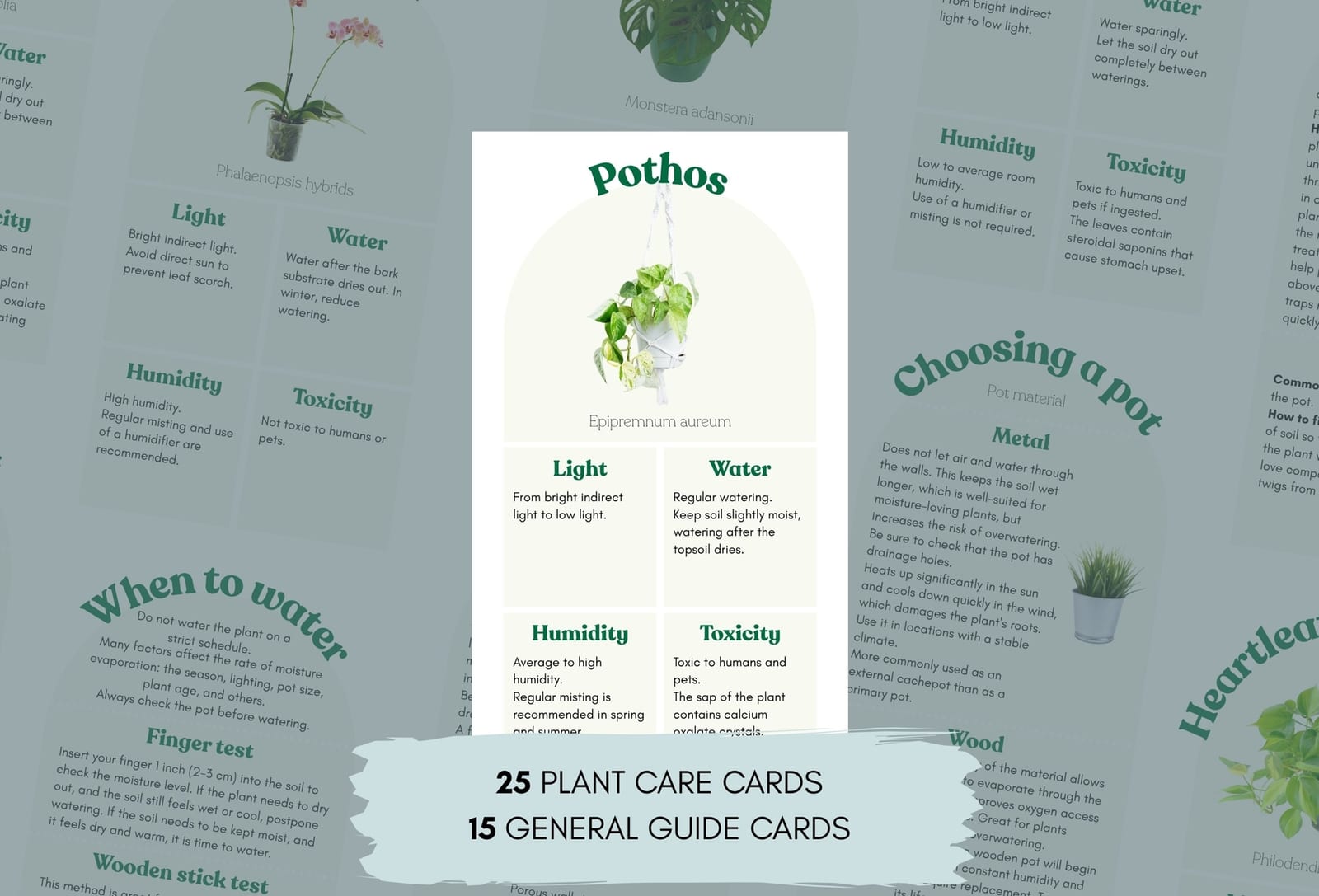
Pothos

Epipremnum aureum
Formerly: Pothos aureus, Scindapsus aureus, Rhaphidophora aurea
Also known as: Golden Pothos, Devil's Ivy, Devil's Vine, Ceylon Creeper, Hunter's Robe, Ivy Arum, Silver Vine, Solomon Islands Ivy, Taro Vine

Highly resilient and adaptable to home or office environments, making it suitable for beginners. The plant tolerates irregular watering and low light, but reacts quickly to excess moisture: stagnant water in the soil leads to root rot. Care errors cause visible stress: leaves turn yellow from overwatering, brown at the tips from dry air, and droop from underwatering.

At a glance

LightFrom bright indirect light to low light.
WaterRegular watering. Keep soil slightly moist, watering after the topsoil dries.
TemperatureWarm-loving. In summer 64-77°F (18-25°C). In winter not below 59°F (15°C).
HumidityAverage to high humidity. Regular misting is recommended in spring and summer.
Growth rateFast
Size5-10 ft (1.5-3 m)

About the plant

Description

Epipremnum aureum grows as an herbaceous vine and hemiepiphyte, using aerial roots to climb tree trunks toward the light. The heart-shaped leaves are marked with variegation: yellow and white patterns that help capture dappled light under the forest canopy. Without support, the stems trail freely, maintaining their juvenile form with smaller leaves.
Origin

The species is native to the island of Moorea in French Polynesia. In its natural habitat, the vine grows in the warm and shaded understory of humid tropical rainforests, climbing up tree trunks. This forest origin explains the vine's preference for indirect light, humid air, and vertical supports. Today, the species has naturalized in many tropical and subtropical regions worldwide, where it often forms dense mats on the ground.

History

First described by Belgian botanist Jean Linden and Édouard André in 1880 as Pothos aureus. The species was subsequently moved to other genera, including Scindapsus and Rhaphidophora, which explains why these names are still used colloquially. In 1964, American botanist George Bunting transferred the vine to the genus Epipremnum, establishing the currently accepted name Epipremnum aureum. Since the early 20th century, it has become one of the most popular houseplants.

Care

Light

Pothos prefers bright indirect light, but tolerates partial shade. Under low light, variegated varieties lose their pattern and turn solid green. Place the plant on east- or west-facing windowsills, shading it from the midday sun: direct rays leave dry white scorch marks on the leaves. During winter, when natural light is scarce, it is beneficial to use grow lights to keep new shoots from becoming leggy.

Water

Water the plant after the top 0.8-1.2 inches (2-3 cm) of soil dry out. During active growth in spring and summer, check the soil more frequently to avoid missing a watering, as it dries out faster. In winter, reduce watering and allow the soil to dry out deeper. Always discard excess water from the saucer 15-20 minutes after watering: constant wetness cuts off oxygen to the roots and causes them to rot.

Humidity

Pothos prefers moderate humidity levels of 40-60% and easily tolerates average indoor air. However, in very dry air, leaf tips can turn brown and dry out, and plant growth may slow down. To raise humidity, mist the foliage with lukewarm water, use a humidifier, or set the pot on a tray of wet pebbles. In winter, keep the plant away from heating radiators. Ventilate the room regularly to prevent stagnant, damp air and fungal growth, but protect the vine from sudden cold drafts.

Temperature

Pothos prefers warmth: during active growth, maintain the temperature between 65-80°F (18-27°C), and in winter, ensure it does not drop below 59°F (15°C). The plant tolerates brief temperature drops down to 50°F (10°C), but prolonged cold damages the roots and foliage, and it dies at temperatures below 41°F (5°C). Protect the vine from drafts and sudden temperature swings, and do not place the pot near air conditioners or hot radiators. If keeping the plant on a cool windowsill in winter, always use a wooden or cork stand to prevent the soil from getting too cold.

Soil

Choose a light, well-draining, and nutritious substrate for pothos. An all-purpose peat- or coco-coir-based potting soil mixed with amendments is ideal. Add perlite, fine pine bark, or coco chips to the soil in a 2:1 ratio: this is essential for good root aeration and protection from stagnant water. To lower soil water retention and reduce the risk of overwatering, place a drainage layer at the bottom of the pot. Any drainage materials reduce the amount of moisture held in peat, but coarse sand is the most effective: it prevents soil particles from washing down and clogging the drainage holes. If you want to give the roots the entire volume of the container, skip the bottom layer and add more amendments when preparing the mix.

Pot

Choose standard pots or hanging planters for pothos, ensuring the container has drainage holes to prevent root rot. Plastic, terracotta, and glazed ceramic are all suitable materials. Unglazed terracotta is highly recommended: its porous walls wick away excess moisture, protecting the roots from waterlogging.

Fertilizer

During active growth from spring to late summer, feed pothos with a balanced liquid fertilizer (such as NPK 10-10-10 or 3-1-2) every 3-4 weeks. Dilute the mixture to one-quarter or half of the recommended strength: the plant's roots are highly sensitive to excess salts. Apply the fertilizer only to damp soil after regular watering with clean water, and stop feeding entirely in winter. Signs of overfertilization include yellowing leaves, dry tips, and white salt residue on the soil; if this happens, flush the soil with plenty of clean water.

Repotting

Repot pothos in spring or early summer during its active growth. Repot young plants annually, and mature specimens every 2-3 years. Look for diagnostic signs like roots emerging from drainage holes, slowed growth, or soil drying out too fast. Choose a new pot that is only 1 inch (2-3 cm) larger in diameter than the current one to prevent root rot. Water the plant thoroughly a few days before repotting to reduce root stress. Gently remove the plant from its container, loosen the roots, and trim away any dry or rotten sections. Place the pothos in the new container, keeping the root system at the same depth, about 1 inch (2.5 cm) below the rim. Fill the gaps with fresh soil, water the plant well, and avoid fertilizing for 4-6 weeks.

Growth

Lifespan

Indoors, pothos lives for 5-10 years, but regular rejuvenation can extend its lifespan for decades. Bare stems at the base and yellowing lower leaves indicate that the plant is aging. Regularly prune long stems to stimulate branching, and use the cuttings to grow new healthy vines.

Where it can grow

For indoor placement, choose a draft-free spot with stable temperatures between 65-80°F (18-27°C). Keep the plant away from heating vents, air conditioners, and cold windows to prevent temperature fluctuations from damaging the foliage. In summer, when overnight temperatures stay consistently above 59°F (15°C), you can move the vine outdoors to a balcony or garden spot in bright, indirect light or dappled shade. Protect it from direct midday sun to avoid leaf scorch, and bring it back indoors in the autumn before temperatures drop below 59°F (15°C).

Cold hardiness

Grow pothos outdoors year-round only in USDA hardiness zones 10-12. In all other climates, cultivate it as a houseplant to protect it from frost. Bring the pot back indoors in autumn when overnight temperatures begin to drop below 59°F (15°C).

Growth rate

Fast growth rate. During the warm spring and summer period, stems can lengthen by 12-18 inches (30-45 cm) per month with proper care. Growth slows down significantly in fall and winter. Regularly pinch the tips of the stems to stimulate branching and maintain a bushy shape. To maintain this fast growth rate, provide the vine with bright indirect light, regular watering, and timely feeding.

Mature size

Indoors, pothos stems reach 5-10 feet (1.5-3 m) in length, whereas in the wild, this vine can grow up to 40-65 feet (12-20 m). Indoor leaves typically remain small and heart-shaped, measuring 3-6 inches (7.5-15 cm) in length. To increase leaf size, train the vine up a vertical support (such as a moss pole): over time, new leaves will grow larger and begin to split into lobes. Regularly prune the stems to control the plant's size and stimulate thick foliage growth at the base.

Blooming

Pothos never flowers in indoor cultivation. The plant has a rare genetic defect: it lacks the functional gene responsible for producing the hormone gibberellin, which triggers the flowering process. For this reason, flowering in this vine can only be induced in laboratory conditions using artificial hormone treatments. The plant's main decorative value lies solely in its variegated foliage.

Dormancy

There is no true dormancy period: the vine remains evergreen and grows year-round when conditions are suitable. In winter, shorter days and lower light cause growth to slow down significantly. From October through February, reduce watering and let the top 1-1.5 inches (3-4 cm) of soil dry out between waterings. Stop fertilizing entirely during this period to avoid overloading the less active root system. Move the pot to the brightest spot possible or use grow lights for 12-14 hours a day to prevent the shoots from stretching. Keep temperatures between 65-80°F (18-27°C): below 59°F (15°C), growth nearly stops.

Maintenance

Pruning

In spring, regularly pinch stem tips to stimulate branching and prevent leggy growth. Use clean, sharp shears or scissors to remove yellowing leaves and bare vine sections. Make cuts 0.2-0.4 inches (5-10 mm) above a leaf node to encourage new growth. Perform sanitary pruning year-round as needed, but schedule the main shaping for spring and summer. Wear gloves to protect your skin from the irritating sap, and wipe your tools with rubbing alcohol before and after work.

Propagation

Propagate pothos in spring or summer using stem and tip cuttings. Cut the vines into sections with 1-2 nodes and at least one healthy leaf, making the cut directly below a node. Cuttings root easily in water, moist perlite, or a light peat-sand mix at room temperature. If rooting in water, change it weekly, and transplant the cuttings into potting soil once the roots reach 1-2 inches (2-5 cm) in length.

Support

Grow pothos as a trailing plant or train it upward on a vertical support. Climbing an artificial support or a moss pole mimics the vine's natural environment, encouraging the growth of larger leaves. If using a moss pole, keep it consistently damp so the aerial roots can absorb moisture and nutrients directly from the moss. When using trellises or lattices, use ties or plastic clips to help the vine secure itself and direct its growth. Alternatively, let the vines cascade down from hanging baskets or shelves, though in this case, the leaves will remain smaller.

Problems

Rot

Overwatering and waterlogging at the roots lead to blackening and decay at the base of the stems. For prevention, let the soil dry out to a depth of 0.8-1.2 inches (2-3 cm) between waterings. At the first signs of disease, stop watering and let the soil dry out, remove the affected tissue, and treat the cuts with a fungicide. If the stem has rotted at the base, cut healthy tip cuttings for rerooting, and discard the dead roots and soil.

Etiolation

In low light, the stems stretch excessively and the spacing between leaves increases. To maintain a bushy crown, keep the pot in bright, indirect light. If the vines have already become leggy and bare, prune them to stimulate branching, and use the tips to root new vines.

Pests

Mealybugs, spider mites, or scale insects may occasionally infest the stems and leaves. For protection against pests, wipe both sides of the leaves with a damp cloth every 3-4 weeks and inspect the plant. If insects are found, rinse the plant under the shower and treat it with insecticidal soap.

Safety

Human

Toxic

Contains insoluble calcium oxalate crystals that cause irritation upon contact or ingestion. Skin contact with the sap can lead to redness, itching, and contact dermatitis. If swallowed, the plant causes immediate burning and swelling of the mouth, tongue, and throat, as well as difficulty swallowing, nausea, and vomiting. Wear gloves when pruning the vine, and wash your hands thoroughly with soap and water if sap contacts the skin. If ingestion occurs, rinse the mouth with water, and seek medical help if severe swelling or breathing difficulties develop. Keep the plant out of reach of children.

Dog

Toxic

Contains insoluble calcium oxalate crystals in all parts of the plant. When leaves are chewed, these needle-like microcrystals cause immediate burning and sharp pain in the dog's mouth. Symptoms of poisoning include excessive drooling, foaming, vomiting, difficulty swallowing, and pawing at the mouth. If ingestion is suspected, clear the mouth of any plant debris, rinse it with water, and contact a veterinarian. Do not induce vomiting to avoid repeat damage to the esophagus.

Cat

Toxic

Contains insoluble calcium oxalate crystals that cause severe burning and pain in the cat's mouth, tongue, and lips. If leaves are ingested, the cat experiences excessive drooling, vomiting, and difficulty swallowing, and may anxiously paw at its face. If poisoning is suspected, remove any plant debris from the mouth, gently rinse it with water, and contact a veterinarian. Do not attempt to induce vomiting, as the oxalates will damage the esophagus on the way back up.

This information is for general guidance only and is not medical or veterinary advice. If you suspect poisoning, contact a doctor, vet, or poison control immediately.

Etsy